Topanish Door
Why Do Aluminum Doors and Windows Have Quality Issues?
Aluminum doors and windows can look flawless in a showroom, yet show problems after installation. A sash may scrape its frame. Water may gather along the sill after a hard rain. These failures often begin before delivery, with uneven extrusion, weak corner joints, poor surface treatment, or components that do not match the specification. Installation mistakes can add to the trouble, so the product alone may not tell the whole story.
Quality management expert W. Edwards Deming is widely associated with the reminder, “Quality is everyone’s responsibility.” That principle applies to buyers, fabricators, suppliers, and installers. Ask for clear product specifications, including profile thickness, hardware details, glass configuration, and coating information. Inspect sample corners and opening mechanisms; a smooth handle is reassuring, but it proves little about long-term performance. Check measurements carefully, too. Even a well-made frame can fail when the opening is out of square.
How to avoid quality problems when buying aluminum doors and windows starts with evidence, not promises. Request test reports that match the exact product being quoted, and confirm who handles installation and after-sales support. Compare what is written with what arrives on site. Small discrepancies matter. I would also question any claim that a product is “maintenance-free”; that wording deserves scrutiny. No checklist removes every risk, but specific questions and documented answers make hidden weaknesses harder to overlook.
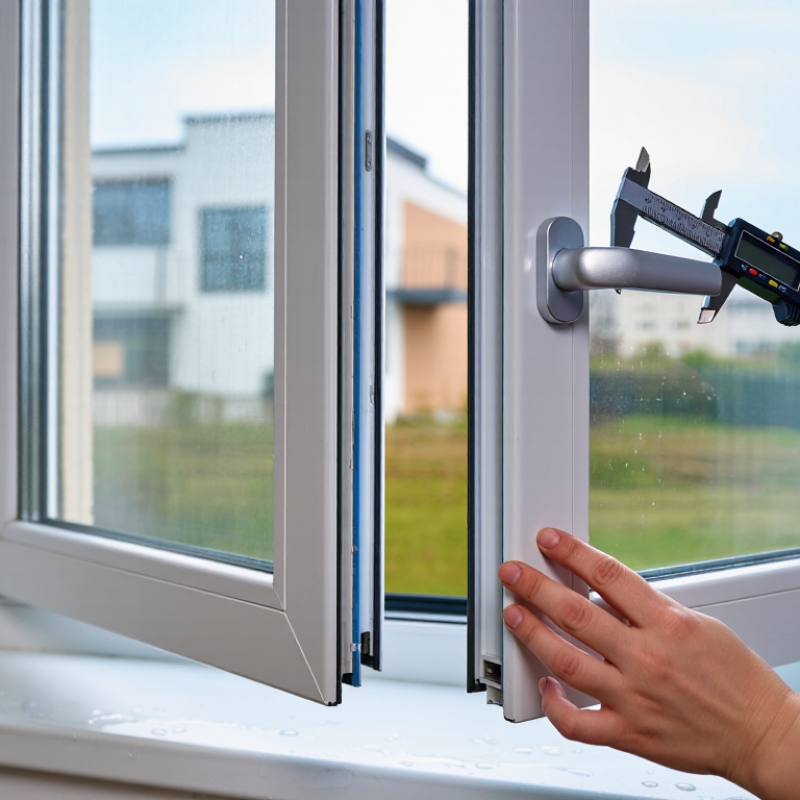
An aluminum door or window starts as an alloy billet, heated and pushed through a shaped die. The resulting extrusion forms the frame’s rails, stiles, and drainage channels. Small errors matter. Uneven cooling or poor die maintenance can leave profiles twisted, thin-walled, or difficult to assemble. The International Aluminium Institute reports that recycling aluminum uses about 95% less energy than primary production. Recycled content can be used, but alloy composition still needs careful control.
After extrusion, profiles are cooled, cut, and often heat-treated to improve strength. Fabricators then machine corners, fit hardware, and join frame sections. A thermal-break strip, commonly made from polyamide, separates inner and outer aluminum surfaces and reduces heat transfer. Glass is fitted with gaskets and setting blocks; misplaced blocks can cause pressure points or rattling. Looks can deceive. A clean finish cannot prove that seals, joints, or drainage paths work properly.
Quality checks should examine dimensions, coating thickness, corner strength, water drainage, and air leakage. The U.S. Department of Energy notes that windows account for roughly 25–30% of residential heating and cooling energy use. That makes accurate assembly more than a cosmetic concern. Testing to recognized air-leakage and structural standards helps expose weaknesses, though a test sample may not represent every production unit. A factory can still miss defects. Regular inspections during cutting, assembly, and glazing help catch them before installation.
Aluminum doors and windows can look identical on a showroom floor yet perform very differently after installation. The alloy, temper, and extrusion consistency matter: uneven wall thickness can weaken corners or make frames harder to align. Small details matter. A thermal break also needs continuous, secure bonding between the inner and outer aluminum sections. If it is interrupted, heat can pass through the frame more easily, even when the glass is efficient. The U.S. Department of Energy’s Energy Saver guidance estimates that heat gain and loss through windows account for 25–30% of residential heating and cooling energy use. That figure covers windows broadly, not aluminum frames alone, but it shows why frame design deserves attention.
Components can undo good material choices. A compressed or poorly fitted gasket may let air or water through; mismatched hinges and locks can strain the frame during everyday use. Sealant application matters, too. A thin, uneven bead around a corner can become a leak path. Testing under AAMA/WDMA/CSA 101/I.S.2/A440 evaluates air leakage, water penetration, and structural performance, helping buyers compare tested assemblies rather than judging finish alone. Still, lab results cannot capture every installation condition. A slightly out-of-square opening can create problems that the product itself did not cause. That distinction is easy to miss. Quality depends on the material, the components, and how carefully they meet on site.
Aluminum doors and windows can develop quality problems long before installation. The cause is often an inconsistent manufacturing process, not the material alone. A profile cut slightly short may leave a visible gap at a corner. Poorly aligned machining can make hinges bind or locks feel stiff. Small errors accumulate.
Surface preparation matters, too. If aluminum is not cleaned evenly before coating, paint may blister or peel near edges. Uneven coating thickness can also create a patchy finish, especially around corners and drainage slots. These defects may look minor in a sample, then stand out across a full shipment. That is easy to underestimate.
Quality control should check more than appearance. Workers can measure frame diagonals, inspect corner joints, test hardware, and confirm drainage openings remain clear. Coating checks and routine equipment calibration help catch repeat problems early. Records matter: without measurements tied to each production batch, it is hard to trace a defect back to its source. Still, inspection is not perfect. A door may pass a factory check and behave differently after transport or fitting. That is why clear acceptance criteria and careful handling deserve attention alongside machine settings.
Aluminum frames are rigid, but they still expand and contract as temperatures change. The design must allow for that movement. Without enough clearance, corners can separate, seals may compress unevenly, and sliding panels can bind. Small details matter. Drainage channels also need clear paths to the exterior. If a sill design traps water, even sound seals may not prevent moisture from reaching the interior.
Installation can turn a workable design into a defective window or door. An opening that is out of square may force the frame into a twist. Installers should check the opening and frame diagonals before fastening. Shims belong near fixing points, not wherever a gap looks large. Over-tightened anchors can bow a jamb, making a sash difficult to close. Flashing laps and sealant joints need careful placement, especially at sill corners. These steps are easy to rush.
Checks during installation catch problems sooner. Operate each panel before trim hides the frame, and confirm that drainage outlets remain open. A controlled water test can reveal leaks around transitions, though results depend on the test method and site conditions. Project specifications should guide clearances and fastening details. Not every defect comes from poor workmanship; sometimes the design leaves too little room for real-world tolerances. That deserves a closer review.
| Stage | Design or Installation Issue | Typical Defect | Why It Happens | Practical Prevention |
|---|---|---|---|---|
| Design | Frame and glass are not specified for the project’s wind loads or opening size. | Excessive frame deflection, difficult operation, air leakage, or glass stress. | Large spans, local wind pressure, and glass weight may exceed the capacity of the selected profiles, reinforcement, or glazing system. | Verify project-specific structural loads and opening dimensions; size profiles, reinforcement, and glazing to suit the tested system. |
| Design | Thermal movement and drainage paths are not adequately considered. | Binding sashes, water accumulation, leakage, or deterioration of adjacent finishes. | Aluminum expands and contracts with temperature changes. Poorly planned clearances or blocked drainage openings can restrict movement and water escape. | Allow for movement in joints and hardware clearances; maintain the designed drainage and pressure-equalization paths. |
| Design | Thermal breaks, glazing seals, or perimeter seals are unsuitable for the exposure. | Condensation, uncomfortable interior surfaces, drafts, or water penetration. | Insufficient thermal separation and incompatible or poorly detailed seals can create cold bridging or gaps in the weather barrier. | Specify an appropriate thermal-break and glazing system; detail continuous, compatible seals at the frame, glass, and building interface. |
| Installation | Frames are installed out of plumb, level, square, or plane. | Sashes rub or fail to latch; sightlines appear uneven; seals do not compress consistently. | Distorted openings, uneven shimming, or tightening fixings against a misaligned frame can alter the frame geometry. | Check the opening before installation; use suitable shims and verify alignment before fully tightening anchors. |
| Installation | Anchors are missing, incorrectly spaced, or over-tightened. | Frame movement, bowing, cracked finishes, or impaired hardware operation. | Loads may not be transferred properly to the surrounding structure, while excessive fixing pressure can distort the frame. | Follow the system’s fixing details and spacing; fasten into sound substrate and avoid drawing the frame out of shape. |
| Installation | Perimeter flashing, sealant, or sill detailing is incomplete. | Water leaks around the frame, damp reveals, or damage to interior finishes. | A window or door relies on a continuous connection to the wall’s water-management layer. Gaps, poor adhesion, or incorrect sill drainage can let water bypass the frame. | Integrate the frame with the wall’s weather-resistive barrier; prepare surfaces correctly and keep sill drainage openings clear. |
| Installation | Glass, gaskets, rollers, or locking hardware are fitted or adjusted incorrectly. | Rattling glass, uneven gaps, stiff operation, incomplete locking, or premature seal wear. | Incorrect setting-block placement, damaged seals, or poor hardware adjustment can leave components unsupported or misaligned. | Use the specified glazing blocks and gaskets; inspect components and test sash movement, sealing, and locking after installation. |
Common aluminum-door and window defects often appear at the corners, seals, and moving parts. Look closely. Check for uneven frame gaps, scratched or oxidized surfaces, loose handles, and rollers that scrape instead of glide. A sash that needs lifting to latch may indicate poor alignment or frame distortion. Press gently around the frame; visible movement can point to weak anchoring, though this check cannot confirm the cause.
Inspect the weatherstripping for gaps, flattened sections, or daylight around closed panels. After rain, look for water stains beneath the sill and dampness at the frame joints. A small amount of condensation is not proof of a leak, so note when and where it appears. The U.S. Department of Energy reports that heat gain and loss through windows accounts for about 25–30% of residential heating and cooling energy use (Energy Saver, “Update or Replace Windows”). That makes persistent drafts worth investigating, but energy loss alone does not identify a faulty product. For suspected water penetration, ask a qualified professional about controlled field testing under ASTM E1105. Visual checks are useful, but imperfect: installation details can create symptoms that resemble manufacturing defects.
How to identify air-leakage problems using the EN 12207 classification benchmark
EN 12207 classifies air permeability at a reference pressure of 100 Pa. Lower leakage values indicate tighter performance; Class 4 is the tightest class shown. Drafts around the frame or sash can point to worn or poorly fitted seals, misalignment, or installation gaps. This chart shows classification limits, not measured results for a specific product.
Alloy quality, temper, and extrusion consistency all matter. Uneven frame walls can weaken corners or make alignment difficult.
It separates the inner and outer aluminum sections to slow heat transfer. The bond should be continuous. Small gaps matter.
Yes. Windows broadly account for about 25–30% of residential heating and cooling energy use. This figure does not apply to aluminum frames alone.
Poorly fitted gaskets, uneven sealant, or mismatched hardware can create problems. Check the corners and the seal around closed panels.
Look for uneven frame gaps, scratched surfaces, peeling coating, and corners that do not meet cleanly. Small errors can add up.
Look for daylight around closed panels, loose handles, and rollers that scrape. A sash that needs lifting to latch may be misaligned.
No. Condensation alone does not confirm water penetration. Note when and where it appears, and check for stains after rain.
No. Testing can compare air leakage, water resistance, and structural performance, but installation conditions still matter. I might overread one result.
Check the sill and frame joints for dampness. A qualified professional can discuss controlled field testing, such as ASTM E1105. Visual checks have limits.
Aluminum doors and windows are made by shaping aluminum profiles, adding components such as glass, seals, and hardware, and assembling the finished units. Their quality depends on every stage of this process. Inconsistent material thickness, weak coatings, poorly fitted components, inaccurate cutting, and insufficient inspection can all affect strength, operation, weather resistance, and appearance. Even well-made products may develop problems if their design does not suit the building or if measurements and installation are handled incorrectly.
Common issues include difficult operation, gaps, water or air leakage, uneven frames, and damaged finishes. Buyers can reduce risks by checking product specifications, component quality, workmanship, and inspection procedures before placing an order. They should also confirm that the design matches the intended opening and local climate, provide accurate measurements, and use experienced installers. Understanding How to avoid quality problems when buying aluminum doors and windows helps buyers assess products carefully and identify potential defects before they become costly repairs.
