Topanish Door Topanish Door

Top 10 Tips for Choosing Commercial Aluminum Doors and Windows?

Time:2026-09-16 Author:Isabella
0%

Choosing commercial aluminum doors and windows is not simply a matter of selecting attractive frames. A busy office, retail entrance, or hotel lobby demands different performance from a quiet interior partition. Traffic levels, weather exposure, security needs, energy use, and cleaning routines all affect the right specification. This guide explores How to choose aluminum doors and windows for commercial projects through practical, field-informed considerations.

A well-designed system should open smoothly after thousands of cycles, seal tightly during heavy rain, and remain stable under daily use. Look closely at frame thickness, thermal breaks, glass performance, hardware quality, drainage paths, and tested air and water resistance. A narrow frame may create a clean appearance. It may also reduce strength if the system is poorly engineered. Request technical drawings, test reports, product samples, and clear warranty terms from qualified suppliers. Local building requirements should also be checked by the project team and relevant professionals.

Details matter.

For example, a ground-floor entrance may need concealed closers, impact-resistant glass, accessible thresholds, and durable finishes around the handle area. Coastal projects require stronger attention to corrosion protection. High-rise applications may need careful wind-load calculations and specialist installation. No checklist is flawless. Site conditions can change, and attractive catalog images cannot reveal every weakness. Comparing documented performance with real project experience creates a more reliable decision. The following ten tips will help buyers avoid costly substitutions, confusing specifications, and failures that appear only after installation.
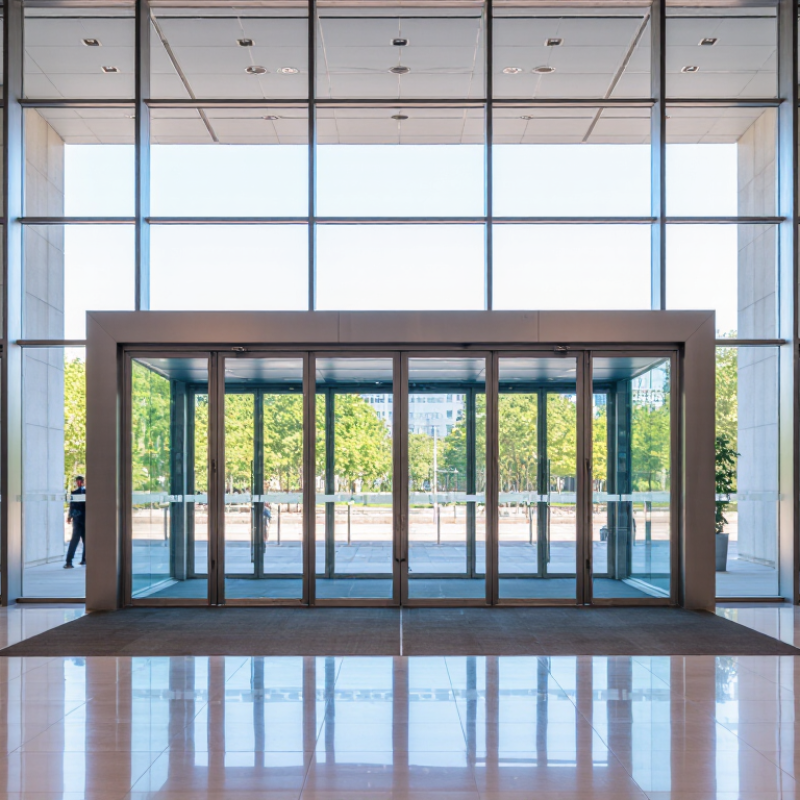
Top 10 Tips for Choosing Commercial Aluminum Doors and Windows?

Define Project Requirements and Performance Goals

Commercial aluminum doors and windows perform well only when project requirements are clearly defined. Start with the building’s use, location, opening sizes, and daily traffic. A busy retail entrance needs stronger hardware than a quiet office window. Record exposure to wind, rain, sunlight, dust, and temperature changes. These details shape the frame, glass, seals, and drainage design.

Set measurable performance goals before comparing products. Specify thermal transmittance, solar control, acoustic reduction, air leakage, water resistance, and structural capacity. Check local building requirements and request current test reports from qualified suppliers. On site, measure every opening instead of trusting old drawings. A few millimeters can create costly installation problems. I have seen attractive systems fail because the threshold was ignored.

Tips: Create a room-by-room schedule. Note dimensions, glass type, operation, security needs, and maintenance access. Use simple target ranges, such as reduced heat gain for west-facing glass or improved sound control near traffic. Ask for a physical corner sample or mock-up. It reveals gaps, sightlines, handle reach, and drainage weaknesses better than a brochure. Do not over-specify every feature; unnecessary performance can increase cost and complicate installation. A spreadsheet helps, but it cannot replace a careful site walk. Leave room for revision. That is often where better decisions begin.

Compare Aluminum Grades, Profiles, and Thermal Break Options

Commercial aluminum doors and windows should be selected by performance, not appearance alone. Alloy grade matters because it affects strength, extrusion quality, and finishing consistency. Common 6063 aluminum supports smooth, detailed profiles and reliable surface treatment. Stronger alloys may suit large doors, heavy glass, or exposed entrances. Ask for the alloy and temper in writing. Do not accept “premium aluminum” as a specification.

Profile design deserves close inspection. A narrow frame may increase glass area, but it can reduce space for drainage, hardware, and reinforcement. Check wall thickness, chamber depth, corner joints, and gasket placement. On a recent project, the elegant profile looked excellent but lacked enough drainage capacity during heavy rain. That mistake was expensive to correct. Request section drawings before approving fabrication.

Thermal break options are equally important in conditioned buildings. A continuous insulating strip separates the interior and exterior aluminum paths, reducing heat transfer and interior condensation. Compare the break width, material, connection method, and tested U-value. Wider is not automatically better. Poor assembly can defeat a well-designed system. Review air leakage, water resistance, wind pressure, and acoustic test data for the complete window or door, not the frame alone. Glass selection also changes results. Low-emissivity glazing, warm-edge spacers, and correct installation can improve comfort near the frame. Small details matter. Be cautious with exaggerated energy claims. Real performance depends on climate, orientation, shading, and workmanship.

Evaluate Glass Types, Energy Efficiency, and Weather Resistance

Choosing commercial aluminum doors and windows requires more than comparing frame prices. Glass selection should match the building’s climate, orientation, and occupancy. Double glazing with a low-emissivity coating can reduce heat transfer, while triple glazing may suit colder regions. Laminated glass improves acoustic control and safety; tempered glass handles impact and thermal stress better. Check U-factor, solar heat gain coefficient, visible transmittance, and air leakage together. One number never tells the whole story.

Energy performance deserves careful attention. The International Energy Agency reported that buildings consumed about 30% of global final energy in 2022. The U.S. Energy Information Administration’s Commercial Buildings Energy Consumption Survey also identifies heating and cooling as major energy uses. Thermally broken aluminum frames can limit conductive losses, but poor installation can undermine excellent glass. I have seen specifications focus heavily on U-factor while overlooking solar gain. That approach needs reconsideration.

Weather resistance is equally practical. Require documented testing for air infiltration, water penetration, and structural performance under recognized standards, such as ASTM E283 and ASTM E331. Inspect corner joints, gaskets, sill drainage, and sealant continuity. Wind-driven rain rarely enters through the center of a panel; it finds weak edges. Ask for performance data at the project’s design pressure, not a generic laboratory value. Small details matter. Coastlines, high-rise façades, and dusty sites may need different finishes and maintenance intervals. Real-world conditions are often messier than the specification sheet.

Check Security Features, Hardware Quality, and Accessibility Compliance

Top 10 Tips for Choosing Commercial Aluminum Doors and Windows

Security should be checked as a complete system, not as a single lock. Inspect frame anchoring, hinge protection, cylinder resistance, and glass type. Laminated safety glass can slow forced entry while reducing dangerous shards. Ask for tested performance data, not vague claims. A strong door with weak fixings remains vulnerable.

Hardware quality affects daily safety and operating costs. Choose corrosion-resistant handles, closers, hinges, and panic devices for the building’s traffic level. Examine cycle ratings and replacement access. During site reviews, I often find loose screws and poorly adjusted closers after installation. Small defects matter. Schedule inspections before users report sticking doors.

Accessibility compliance must be considered from the first drawing. Check clear opening width, threshold height, opening force, handle shape, and reach range against applicable local requirements. Lever handles are usually easier to operate than tight knobs. Use visual contrast where glass walls could be missed. Security controls should remain reachable for wheelchair users and people with limited strength. Automatic operators can help, but they need safe sensors and reliable manual operation. A doorway can be secure and still feel difficult. That is a design failure worth revisiting. Ask the installer to demonstrate real use, including a slow approach, a loaded trolley, and an emergency release. Test records, maintenance instructions, and clear responsibility for future adjustments make the specification more dependable.

Top 10 Tips for Choosing Commercial Aluminum Doors and Windows

Check security features, hardware quality, thermal performance, durability, and accessibility compliance before approving a commercial aluminum door or window system.

The chart shows measurable accessibility benchmarks from the 2010 ADA Standards for Accessible Design, including Sections 309 and 404. Verify all requirements against the applicable local building code, occupancy type, and project conditions. Values use inches or pounds as indicated in each label.

Selection Checklist

  1. Confirm that door clear openings provide at least 32 inches of usable width where accessibility requirements apply.
  2. Check thresholds, transitions, and floor interfaces to reduce trip hazards and maintain accessible travel paths.
  3. Verify that opening force and operating force meet the applicable accessibility limits.
  4. Specify lever handles, push hardware, or other operable hardware that can be used with one hand without tight grasping or twisting.
  5. Confirm that door hardware is mounted within the required accessible reach range.
  6. Choose corrosion-resistant aluminum finishes and hardware suitable for the building’s exposure conditions.
  7. Review lock cylinders, panic or exit devices, hinges, closers, and fasteners as a complete security system rather than as separate components.
  8. Request documented test results for air leakage, water penetration, structural performance, and forced-entry resistance where relevant.
  9. For windows, check safe operating limits, restrictors, guards, emergency egress requirements, and the accessibility of controls.
  10. Compare thermal breaks, glazing type, seals, drainage, maintenance requirements, and expected service life before selecting the lowest initial price.

Verify Installation Standards, Maintenance Needs, and Supplier Reliability

Choosing commercial aluminum doors and windows requires more than comparing frame prices. Installation standards often decide whether the system performs well after handover. The U.S. Department of Energy reports that windows can account for 25–30% of building heating and cooling energy use. Small installation gaps can therefore create expensive comfort problems. Require approved shop drawings, verified thermal breaks, correct shims, and continuous perimeter seals. Field testing should reference ASTM E783 for air leakage and ASTM E1105 for water penetration. FGIA/AAMA 501.2 testing can also help identify visible leakage around installed storefronts.

Watch the details.

Maintenance needs should be written into the specification, not discussed vaguely. Ask for cleaning methods, gasket replacement intervals, hardware lubrication guidance, and drainage-channel access. A quarterly inspection can reveal blocked weep holes, loose fasteners, cracked sealant, or early corrosion near coastal sites. The National Fenestration Rating Council emphasizes verified product performance, but ratings cannot correct poor workmanship. That uncomfortable point is easy to miss.

Supplier reliability needs evidence. Request recent test reports, material traceability, quality-control records, spare-parts availability, and realistic delivery schedules. ISO 9001 certification may support process consistency, but it does not guarantee every shipment is defect-free. Visit a completed project when possible. Check whether doors close evenly after heavy use, whether replacement parts arrived promptly, and whether warranty responses were documented. A supplier who avoids technical questions may become a costly risk. I would still allow contingency time; project teams often underestimate coordination between glazing, structure, and sealant trades.

Top 10 Tips for Choosing Commercial Aluminum Doors and Windows? - Verify Installation Standards, Maintenance Needs, and Supplier Reliability
No. Selection Dimension What to Verify Practical Benchmark or Requirement Maintenance Consideration Supplier Evidence
1 Confirm Applicable Codes Check local building, fire, accessibility, energy, and wind-load requirements before specifying the system. The approved design should identify required wind pressure, safety glazing, thermal performance, egress, and accessibility criteria for the project location. Keep product labels, approvals, and inspection records available for future repairs and audits. Request a code-compliance matrix prepared for the actual building location and occupancy type.
2 Evaluate Structural Performance Verify design wind pressure, frame strength, glass thickness, hardware capacity, and allowable deflection. Use project-specific structural calculations and test reports; do not select a system solely by frame appearance or nominal size. Inspect loose fasteners, distorted frames, cracked glass, and difficult operation after severe weather or building movement. Require test documentation referencing applicable structural and water-resistance procedures, such as ASTM E330 and ASTM E331 where relevant.
3 Verify Air and Water Tightness Review tested air leakage, water penetration, drainage paths, sill design, gaskets, and perimeter seals. Performance should be supported by laboratory or field testing under applicable standards, including ASTM E283 for air leakage and ASTM E331 for water penetration when specified. Clean weep holes and sill channels at least twice a year, and more often in dusty, coastal, or high-rainfall environments. Ask for complete test reports rather than only general claims such as “weather resistant.”
4 Check Energy Performance Compare whole-product U-factor, solar heat gain coefficient, visible transmittance, and air leakage. Use project energy-model targets and local energy-code limits; aluminum frames may require thermal breaks to reduce heat transfer. Inspect thermal-break areas for damage and replace failed weather seals that can increase drafts and condensation. Request independently verified or simulation-backed performance values for the exact frame, glass, spacer, and size combination.
5 Review Installation Standards Confirm opening preparation, sill support, shimming, anchoring, perimeter flashing, sealant joints, and frame tolerances. Installation instructions should be specific to the system and compatible with the wall assembly, drainage plane, and selected sealants. Schedule a documented inspection before interior finishes conceal anchors, flashing, and sealant continuity. Request an installation manual, approved details, installer qualifications, and a written inspection checklist.
6 Select Suitable Glass and Hardware Match glazing safety, acoustic, security, solar-control, and operating-hardware requirements to each opening. Use safety glazing where required, corrosion-resistant hardware in aggressive environments, and heavy-duty closers or hinges for high traffic. Lubricate moving parts only with products approved for the hardware; adjust or replace worn rollers, closers, locks, and gaskets. Obtain component schedules, replacement-part availability, load ratings, and security or cycle-test information where applicable.
7 Assess Finish and Corrosion Resistance Identify the finish type, pretreatment, exposure category, color consistency, and compatibility with adjacent materials. Coastal, industrial, and high-humidity locations generally require more stringent corrosion protection than sheltered inland applications. Wash exposed aluminum with clean water and a mild, non-abrasive cleaner; avoid harsh acids, alkalis, and abrasive pads. Request finish specifications, cleaning instructions, sample approval, and documented warranty limitations for the exposure conditions.
8 Plan Lifecycle Maintenance Estimate cleaning, seal replacement, hardware adjustment, glass replacement, and inspection requirements over the service life. Create a written maintenance schedule: routine cleaning at least every six months, with shorter intervals for harsh or high-use conditions. Record inspections, defects, repairs, and replaced parts to identify recurring problems before they cause water or safety damage. Ask for maintenance manuals, recommended intervals, service contacts, and a clear list of owner-maintained components.
9 Test Supplier Reliability Evaluate production capacity, quality-control procedures, lead times, packaging, technical support, and delivery records. A dependable supplier should provide approved submittals, accurate shop drawings, traceable quality records, and a documented process for nonconforming products. Confirm that replacement parts, compatible seals, glass, and hardware will remain available after project completion. Request trade references, sample project records, quality certifications, production schedules, and escalation contacts.
10 Compare Total Cost and Warranty Compare purchase price with installation, energy, cleaning, repair, replacement, and downtime costs. Review warranty duration, exclusions, finish coverage, glass coverage, labor responsibility, claim procedures, and conditions that could void coverage. Choose systems that can be serviced without replacing complete frames or large assemblies whenever practical. Require a written, project-specific quotation with inclusions, exclusions, delivery dates, acceptance criteria, and after-sales response times.

FAQS

What project details should be defined before choosing aluminum doors and windows?

Record building use, location, opening sizes, and daily traffic. A busy retail entrance needs stronger hardware than a quiet office window. Note exposure to wind, rain, sunlight, dust, and temperature changes.

Which performance goals should be specified?

Set targets for thermal transmittance, solar control, acoustic reduction, air leakage, water resistance, and structural capacity. Use measurable ranges. Do not demand unnecessary performance, because it may increase cost and installation difficulty.

Why are accurate site measurements important?

Measure every opening on site instead of relying on old drawings. A few millimeters can cause serious installation problems. I have seen attractive systems fail because the threshold was ignored.

What information belongs in a room-by-room schedule?

Include dimensions, glass type, operation, security needs, and maintenance access. Mark west-facing windows needing lower heat gain. Include windows near traffic needing better sound control.

How can a physical mock-up improve product selection?

A corner sample reveals gaps, sightlines, handle reach, and drainage weaknesses. It shows details better than a brochure. The sample may still miss real weather conditions.

Which security features should be inspected?

Check frame anchoring, hinge protection, cylinder resistance, and glass type. Laminated safety glass can reduce dangerous shards and delay unauthorized entry. A strong door with weak fixings remains vulnerable.

How does hardware quality affect daily operation?

Choose corrosion-resistant handles, closers, hinges, and emergency-opening devices for the traffic level. Review cycle ratings and replacement access. Loose screws and poorly adjusted closers can cause sticking doors.

What accessibility details must be checked?

Check clear opening width, threshold height, opening force, handle shape, and reach range. Lever handles are often easier than tight knobs. Glass walls may need visual contrast. A secure doorway can still feel difficult to use.

How should automatic operators and final inspections be tested?

Test safe sensors, manual operation, and emergency release. Ask the installer to demonstrate a slow approach and a loaded trolley. Keep test records and maintenance instructions. Responsibility for future adjustments must be clear.

Conclusion

Choosing the right systems begins with clearly defining project requirements, building use, budget, design goals, and expected performance. When considering how to choose aluminum doors and windows for commercial projects, compare aluminum grades, profile designs, structural strength, and thermal break options to achieve the right balance of durability, insulation, and appearance. Glass selection is equally important, so evaluate glazing types, energy efficiency, sound control, daylight, and resistance to wind, rain, and temperature changes.

Security and usability should also guide the decision. Review locking systems, hinges, handles, impact resistance, and accessibility features to support safe and convenient daily operation. Before purchasing, confirm installation standards, drainage details, sealing methods, warranty terms, and long-term maintenance requirements. Finally, assess the supplier’s technical expertise, production consistency, communication, delivery capability, and after-sales support. A careful comparison of these factors can help commercial projects achieve reliable performance, lower operating costs, and lasting value.

Isabella

Isabella

Isabella is a dedicated marketing professional with a sharp focus on driving brand growth and engagement through strategic content creation. With an extensive background in digital marketing, she combines her passion for storytelling with her keen understanding of industry trends to deliver......