 Topanish Door
Aluminum doors and windows are known for slim sightlines, sturdy frames, and design flexibility. But appearance is only part of the decision. What are the advantages of choosing aluminum doors and windows when comfort, energy use, and long-term upkeep also matter? The answer depends on the frame design, glazing, installation, and local climate. Small details matter.
The U.S. Department of Energy’s Energy Saver guidance, “Update or Replace Windows,” estimates that heat gain and heat loss through windows account for about 25%–30% of residential heating and cooling energy use. That figure describes windows as a whole, not aluminum frames alone. It is a useful reminder to compare complete window systems, including glass and thermal breaks. Aluminum conducts heat readily, so thermally improved frames can help limit heat transfer. Without suitable design, a metal frame may feel cold near the edge on a winter morning. A strong frame cannot fix poor installation.
This guide examines seven practical advantages, from narrow frames that admit more daylight to durability and easier maintenance. It also weighs the trade-offs. Aluminum can resist weathering and support large panes, yet quality finishes and careful installation still matter. Not every product performs equally. Look for documented thermal and air-leakage ratings, and compare them with your project’s needs. The best choice is not simply the sleekest one; it is the system that balances appearance, comfort, and performance over time.
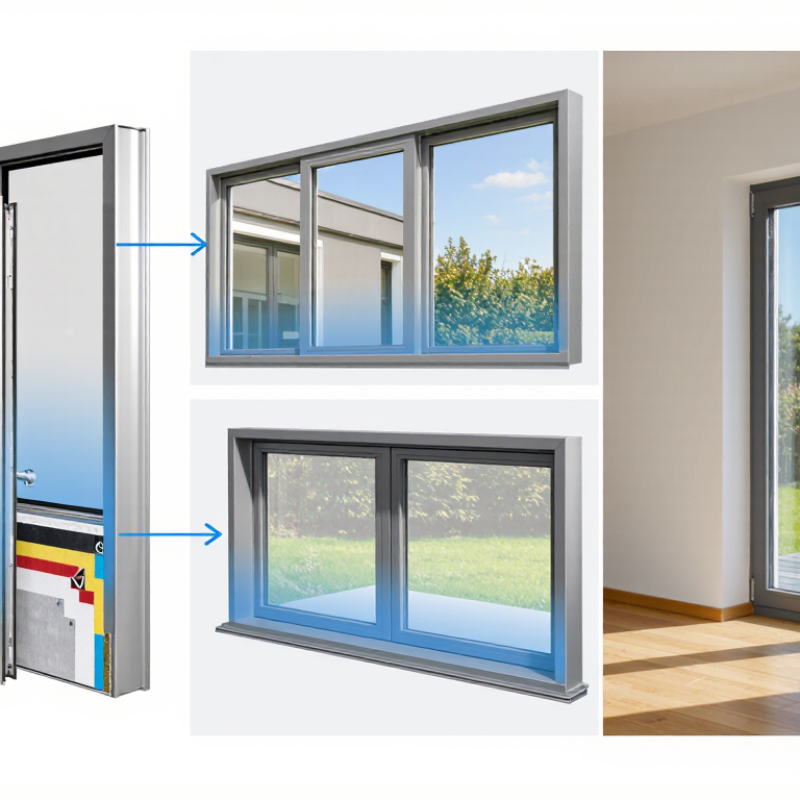
Aluminum doors and windows are usually built around frames made from extruded aluminum alloy. The alloy is shaped into long profiles, then cut and joined to fit the opening. Inside a frame, narrow chambers can help control heat flow and add stiffness. Some designs also include a thermal break, often a strip of insulating material between the inner and outer aluminum sections. It reduces direct heat transfer, though it does not make the frame as insulating as a solid wall. Details matter.
The visible finish may be a durable coating or an anodized surface, chosen for color and weather resistance. Glazing is a separate component: glass sits within the frame and is held by gaskets and glazing beads. Weather seals around opening panels help limit drafts and water entry. Hinges, locks, and handles are typically metal parts selected to suit the panel’s weight and use. A large sliding door, for example, needs a track and rollers that stay aligned under regular movement.
These parts work as a system, but performance depends on more than the aluminum itself. Frame depth, thermal-break design, glass specification, installation, and drainage all affect comfort and durability. A slim frame can look clean, yet it may leave less room for insulation. That trade-off deserves a closer look before choosing a design.
| Tip | Advantage | What the Product Is Made Of | Practical Note |
|---|---|---|---|
| 1. Check for a thermal break | A thermal break reduces heat transfer through the frame compared with a continuous, unbroken aluminum profile. | Many thermally broken frames use separate aluminum sections connected by a low-conductivity polyamide strip. | Ask whether the frame has a thermal break; performance also depends on the glass, seals, installation, and local climate. |
| 2. Use the strength for slimmer sightlines | Aluminum has a high strength-to-weight ratio, allowing many frame designs to use relatively narrow profiles while supporting the glazing. | Frames are commonly made from extruded aluminum alloy profiles, shaped to form the head, sill, jambs, and meeting rails. | The suitable profile size depends on the opening, wind loads, glass weight, and applicable building requirements. |
| 3. Choose glazing for the room and climate | The glass strongly affects daylight, heat gain, heat loss, and sound insulation. | Glazing may be single, double, or triple pane. Insulating glass units use sealed spaces between panes, sometimes filled with inert gas; coatings may also be used. | Compare whole-window ratings rather than judging performance by the frame or glass alone. |
| 4. Look for suitable corrosion protection | Aluminum naturally forms a thin oxide layer that helps protect the surface from further corrosion. | Visible frame surfaces may have an anodized finish or a factory-applied paint or powder-coat finish. | Coastal exposure and contact with dissimilar metals can affect corrosion risk; follow the manufacturer’s cleaning and maintenance guidance. |
| 5. Inspect seals and drainage details | Well-designed seals and drainage paths help limit air and water infiltration when the product is correctly installed and maintained. | Frames commonly include elastomeric gaskets, such as EPDM, along with designed joints, drainage channels, and weep openings. | Keep drainage openings clear and check seals periodically for damage or displacement. |
| 6. Consider recycled content and end-of-life recovery | Aluminum can be recycled, and recycling it generally requires substantially less energy than producing primary aluminum from ore. | The main frame material is aluminum alloy; thermal-break strips, coatings, seals, glass, and hardware are separate materials. | Ask for verified recycled-content information if it matters, and consider how different components can be separated at end of life. |
| 7. Match hardware to the opening and use | Appropriate hinges, locks, rollers, and handles support smooth operation and help the door or window close securely. | Hardware may use stainless steel, steel, or other metals and is fitted to the frame and sash or door panel. | Check hardware compatibility, load capacity, and maintenance needs, especially for large or frequently used panels. |
They use extruded aluminum alloy frames, glass, gaskets, glazing beads, weather seals, and metal hardware. Each part has a job.
It separates inner and outer aluminum sections with an insulating strip. This slows heat transfer, but does not insulate like a solid wall.
Chambers can improve frame stiffness and help control heat flow. Their effect depends on the frame design.
Profile depth, wall thickness, and corner joints help manage glass weight and wind loads. Poor alignment can cause stiff operation or uneven gaps.
Powder coating gives the frame a uniform color. Anodizing creates a durable oxide surface with a metallic appearance.
They let water move through channels and drain outside. Keep the openings clear; dirt or paint can block them.
Slim sightlines can bring in more daylight, but may leave less room for insulation. I would check the glass and thermal-break details too.
View a sample outdoors, where light can change its appearance. Dark finishes may show dust and scratches more clearly.
Check seals, corners, and drainage openings occasionally. Small problems can be easy to miss.
What are the advantages of choosing aluminum doors and windows? Their appeal begins with the material: lightweight aluminum can be formed into frames that support a range of sizes and styles. Frame profiles, glazing options, and surface finishes can be selected to suit a building’s appearance and practical needs. The result is a versatile system that can bring in natural light while complementing both contemporary and traditional designs.
Aluminum frames are valued for their strength and resistance to everyday wear, helping them perform reliably in busy residential and commercial settings. With suitable thermal-break construction and glazing, they can also contribute to improved insulation and indoor comfort. Their smooth, durable surfaces generally need only simple routine cleaning, adding long-term convenience. When choosing a system, consider the building’s use, climate, opening style, energy goals, and desired appearance to find a configuration that balances performance, maintenance, and design.
