 Topanish Door
How to ensure the quality of aluminum doors and windows begins with details you can inspect: straight frames, clean corner joints, even gasket contact, and hardware that moves without binding. The title question sounds simple. The answer is not. A polished finish can hide poor drainage, thin wall sections, or careless assembly. A quality check should therefore look beyond appearance and consider materials, fabrication, sealing, operation, and installation as one system.
Fenestration consultant Dr. Thomas Culp’s work points to a practical principle: glass, frames, seals, and installation must perform together for an opening to work reliably. That is a useful lens, not a substitute for project-specific testing. Check product specifications against the intended opening, and ask for documented performance results where available. Then inspect a sample unit: look for consistent coating, tight joints, secure glazing, and smooth locking. Small clues matter.
A little skepticism helps. A brochure cannot prove that every unit was assembled well. Nor can one quick showroom test reveal how a window will handle repeated use or driving rain. Keep records of measurements, product data, and site checks. This guide explains how to ensure the quality of aluminum doors and windows through practical checks at selection, production, delivery, and installation. It also recognizes an imperfect truth: even careful buyers may miss a flaw. The goal is to reduce that risk with clear evidence and disciplined inspection.
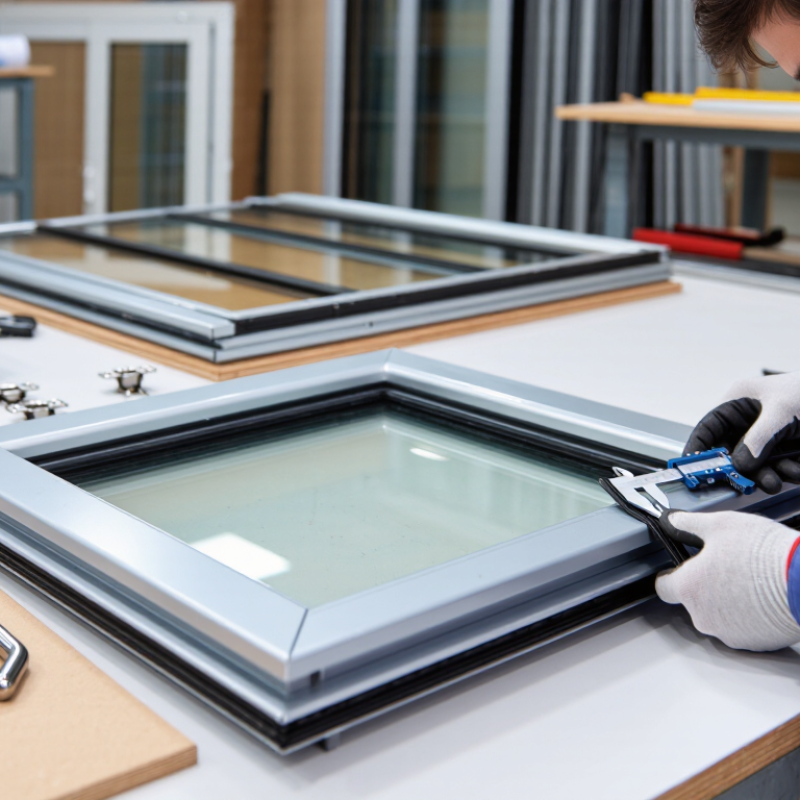
A quality check starts with documented performance, not a smooth showroom sample. Ask for test reports to the applicable edition of AAMA/WDMA/CSA 101/I.S.2/A440, a North American standard covering air leakage, water penetration, and structural performance. Match the product’s rated performance to local code and exposure: a coastal, wind-driven rain site needs different scrutiny than a sheltered patio. For thermal performance, check the National Fenestration Rating Council (NFRC) label for U-factor and solar heat gain coefficient. The U.S. Department of Energy’s Energy Saver guidance estimates that windows account for 25–30% of residential heating and cooling energy use. Ratings matter.
Also inspect finish and hardware. For painted or coated aluminum, request evidence of testing against the relevant AAMA 2600-series specification; the appropriate level depends on exposure and finish type. Check corner joints, drainage openings, weatherstripping, and locks on a sample unit. Ask how installers will flash and seal the frame. A strong window can still leak if installation is careless. A neat sample is reassuring, but it proves little about a full installed unit.
Tips: Compare the same size and configuration across quotes. Keep copies of NFRC labels and test reports, and confirm the exact model matches the paperwork. Look closely at the sill after a water test. Small gaps are easy to miss; I would not treat a brochure as proof.
| Quality Dimension | What to Check | Relevant Standard or Test Method | Acceptance Evidence |
|---|---|---|---|
| Product specification and traceability | Confirm the frame sections, opening type, dimensions, glazing, hardware, finish, and declared performance match the approved project documents. | EN 14351-1 for external pedestrian doorsets and windows in applicable European markets; project specifications and approved shop drawings. | Consistent product labels, technical documentation, drawings, and test reports for the supplied configuration. |
| Aluminum alloy and extrusion | Verify the alloy and temper, profile dimensions, wall design, straightness, and freedom from cracks or significant surface defects. | ASTM B221/B221M covers aluminum-alloy extruded bars, rods, wire, profiles, and tubes; applicable alloy and temper requirements should be stated in the purchase specification. | Mill or supplier certificates identify the alloy and temper; profile checks agree with approved drawings and specified tolerances. |
| Air permeability | Check air leakage through the assembled window or doorset at the specified test pressure. | EN 1026 test method and EN 12207 classification; ASTM E283/E283M is a test method used in North American practice. | A report for the relevant product configuration shows results meeting the project’s specified air-leakage limit or class. |
| Watertightness | Assess resistance to water penetration under the specified pressure and test conditions. | EN 1027 test method and EN 12208 classification; ASTM E331 is a commonly used static-pressure water-penetration test method. | Test results meet the required project class or pressure, with no unacceptable water penetration under the stated test criteria. |
| Wind-load resistance | Check that the frame, sash, glass, and fixings withstand the design wind pressure and satisfy specified deflection and safety criteria. | EN 12211 test method and EN 12210 classification; ASTM E330/E330M is a structural-performance test method used in North American practice. | Test documentation covers the relevant size and configuration and meets the project’s design pressure and performance requirements. |
| Thermal performance | Review the whole-window or whole-door thermal transmittance, including frame, glazing, and edge effects—not just the center-of-glass value. | EN ISO 10077-1 and EN ISO 10077-2 for calculated thermal transmittance; project energy code and specification determine the required value. | Declared or calculated whole-product U-value is supported by documented inputs or an accepted assessment and meets the project limit. |
| Surface coating and corrosion protection | Inspect coating coverage, color consistency, adhesion, and resistance requirements appropriate to the exposure and finish type. | AAMA 2603, AAMA 2604, or AAMA 2605 specify different performance levels for organic coatings on aluminum extrusions and panels; select the level required by the project. | Finish documentation identifies the specified coating system and performance level; inspection shows no unacceptable bare areas, peeling, or damage. |
| Glazing and safety glass | Confirm glass type, thickness, insulating-glass build-up, edge condition, safety-glazing locations, and compatibility with the frame system. | EN 1279 series for insulating glass units; EN 12150 series for thermally toughened glass; EN 14449 for laminated glass. Applicable safety-glazing rules depend on the market. | Glass markings and supplier records match the approved glazing schedule and applicable safety requirements. |
| Hardware and operation | Operate each sash or door to check smooth movement, secure locking, correct alignment, and consistent engagement of hardware. | EN 1191 provides a repeated-opening-and-closing test method for windows and doors; EN 12400 classifies mechanical durability. | Hardware operates without binding or abnormal looseness, and durability evidence meets the class or cycle requirement specified for the project. |
| Seals, drainage, and fabrication | Inspect gasket continuity, corner joints, drainage paths, weep openings, fasteners, and sealant application for the specified system. | Approved system fabrication instructions, shop drawings, and project inspection requirements; performance tests should use the assembled product. | No missing or displaced seals, blocked drainage openings, visibly defective joints, or unapproved substitutions are found. |
| Installation and final inspection | Check opening preparation, frame anchorage, shimming, perimeter sealing, alignment, and operation after installation. | Project installation details, applicable building codes, and manufacturer-independent system installation requirements. | Installation records show that fixing and sealing details were followed; installed units open, close, lock, and drain as intended. |
| Important: Standards, classifications, and required performance levels vary by country, building type, exposure, and product configuration. Treat the project specification and applicable local regulations as the acceptance criteria; cited test methods and standards are not interchangeable. | |||
Ask for documented air-leakage, water-penetration, and wind-load results. Confirm they match the exact size, glazing, and hardware.
Look for clear drainage slots and joined corners. Water should drain outward, not collect inside the frame. Small details matter.
Check that locks engage their keepers, hinges feel secure, and the handle stays firm. The closed frame should remain aligned.
A thermal break reduces heat transfer through aluminum. Insulated or low-emissivity glass can also limit unwanted heat gain or loss.
Not necessarily. Compare U-factor and solar heat-gain figures with the room’s orientation and climate. Sunny and north-facing rooms differ.
Open and close each sash. It should move smoothly, lock without force, and sit evenly. Check seals, flashing, and open drainage paths.
Close the window and test the seal with a thin paper strip. If it slips out easily, ask a qualified installer to assess it.
Brush dirt from tracks and drainage slots. Check hinges, locks, gaskets, and sealant yearly; avoid abrasive cleaners. Recheck after heavy rain.
No. A quick check may miss concealed defects. Take photos of visible gaps, but do not assume the frame is leak-free.
How to ensure the quality of aluminum doors and windows begins with understanding the standards and performance requirements for the intended building. Inspect the aluminum profiles for strength, consistent dimensions, and suitable surface finishes, then check that seals, hinges, locks, and other components are durable and properly matched. Careful fabrication matters: accurate measurements, clean cuts, secure joints, and precise assembly help the finished units operate smoothly and fit as intended.
Quality checks should also consider resistance to wind, rain, and temperature changes, along with security and energy performance. Look for effective sealing, reliable locking points, and glazing suited to the project’s needs. Even well-made doors and windows can underperform if installed poorly, so verify that openings are measured correctly, frames are aligned, and gaps are sealed. Regular cleaning, hardware checks, and timely replacement of worn seals help maintain performance over time.
